
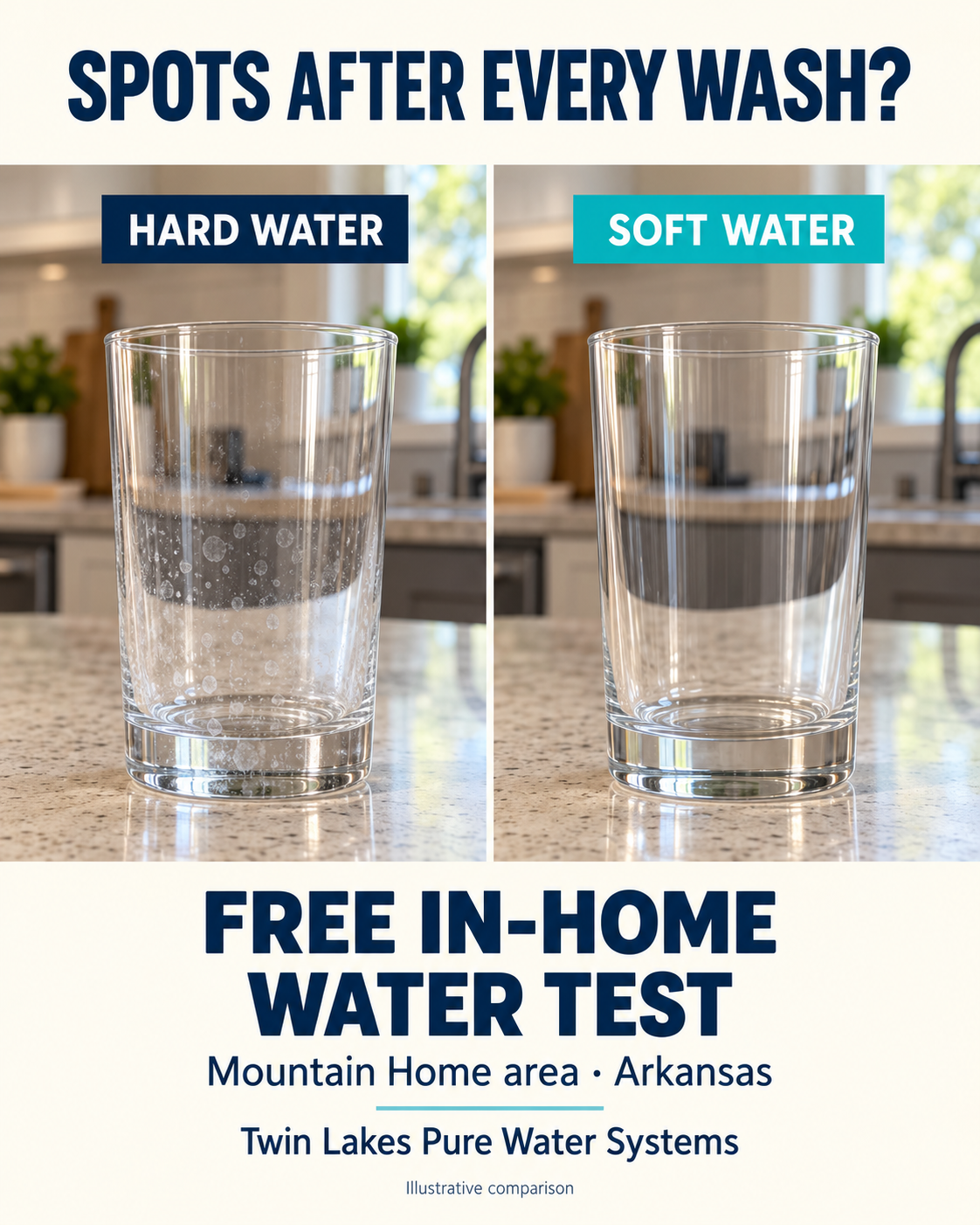
You clean the faucet, get it looking good, and then the marks come back. It’s frustrating when the same job keeps landing on your list.
The water can leave something behind
Hardness is largely associated with dissolved calcium and magnesium. Hard water can leave spots and deposits, and hardness minerals can react with soap to create film. Heating hard water can also produce scale in water-using equipment. USGS explains hardness and its effects.
A visible mark gives us something to investigate. It doesn’t identify everything in your water or tell us which treatment your home needs.
Cleaning and treatment do different work
Cleaning addresses the deposits already on a surface. Treatment is selected for the water coming through the home. A softener can reduce the hardness contributing to new mineral buildup, but it doesn’t make an old faucet or appliance brand-new.
Expect to keep following the care instructions for your fixtures and appliances. A water-treatment recommendation should fit around that maintenance, not replace it.
What about appliance life?
Scale can shorten equipment life. Reducing hardness-related buildup may help protect water-using appliances, but it is not a promise of a particular number of extra years. Equipment condition, maintenance, and other causes of failure still matter. USGS discusses scale and equipment.
Show us what you’re seeing
At your visit, point out the faucet, shower, or glassware that prompted the request. We’ll discuss the test results alongside those concerns and explain whether treatment could help.
Existing leaks and damaged appliances may also need a repair. We won’t describe a treatment system as a repair for something that has already failed.